
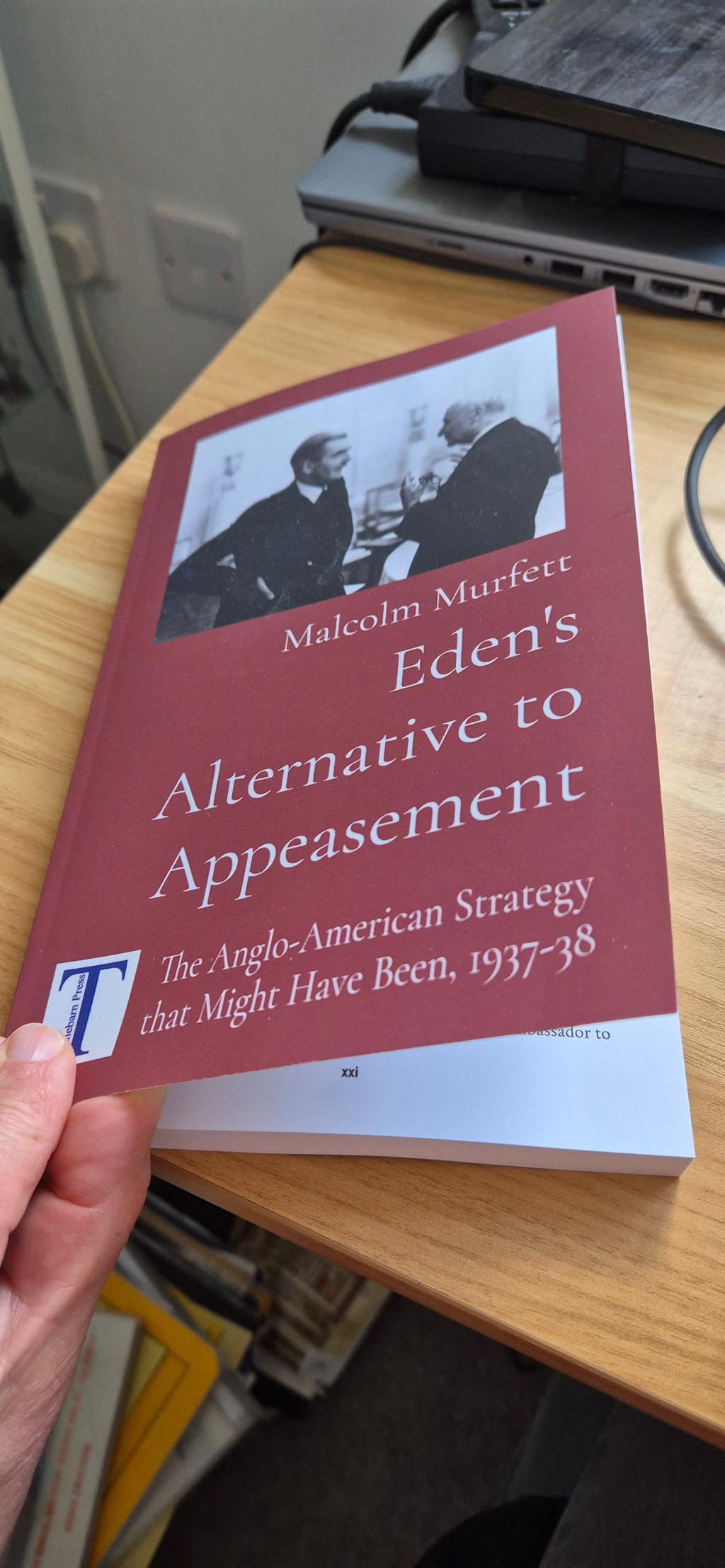
I may have mentioned once, or twice that we’ve now published our first title, Eden’s Alternative to Appeasement by Malcolm Murfett. It’s an immensely proud moment for us, and we want to share it with as many people as we can.
So this week, we thought we’d lay out the reasons why we think reading this particular book is such a worthwhile use of your time. We know the internet loves a numbered list, so we’ve whittled them down to what we think are the 5 most compelling reasons. We also know the internet loves videos, so we have an excerpt from our interview with Malcolm to support each of these reasons:
- It’s very pacily written and reads almost like a thriller. Malcolm’s voice really comes through in the text, making it a very enjoyable read, certainly more so than one would have any right to expect from a book broadly within the category of “diplomatic history”. It’s not just us saying this, both of our reviewers made the same observation. I asked Mal about this in our interview and he emphasised how much he focusses, in his writing as elsewhere, on keeping things engaging. Watch an excerpt of that particular part of our discussion here:
2. It gives us real insight into the challenges of making things happen. Historians often debate the extent to which individuals and their personalities matter in shaping the course of events. As Malcolm makes clear, this is very much at the core of the book. Eden, Roosevelt, Chamberlain and several other key people within the British and American governments were big, forceful personalities pushing to get their own way. At the same time, what they could do was constrained by big factors such as political capital, naval logistics, and competing priorities. In weighing up the relative importance of these the only way to come to an accurate picture is to really engage with the particularities, as Malcolm discusses here:
3. It demonstrates the reality of handling foreign policy. One of the things that can be easy to underestimate when looking back at policymaking, especially foreign policy, is the fact that no one issue can be handled entirely in isolation. Eden was responsible for policymaking in Britain’s foreign affairs across the globe, which were expansive then perhaps even more so than they are today given the extent of the Empire and Dominions at the time. As a skilled statesman, he was trying to coordinate on a number of fronts at the same time in order not just to put out fires but to address multiple priorities simultaneously. So for example, his plan was to strengthen the alliance with the US by combining forces in the Pacific in order to pacify the Japanese and in doing so deter the Germans and Italians in Europe and the Mediterranean. Malcolm is keen to emphasise this importance of simultaneity, and how making foreign policy often requires a leader to handle multiple challenges in parallel. We discuss this here:
4. In exploring a “what if?” scenario Eden’s Alternative to Appeasement reminds us that history was not inevitable. We should always be wary of “counterfactual” histories. They can be seductive in enabling us to appear to prove political points by extolling the virtues of the path not taken, or else to justify what was done by arguing the unfalsifiable point that the alternatives would all have been worse. However, it is equally important when thinking about history to remember that what happened in the past was not inevitable at the time and outcomes that might seem obvious now, may not have been so then. Malcolm reminds us to always be careful when looking backward, to remember what was known and foreseeable to the people at the time:
5. It’s an important prequel to what follows in Eden’s career. Anthony Eden remains one of the big figures in Twentieth Century British history. Not, perhaps, quite up there with Churchill and Chamberlain, but both important and totemic nevertheless. This particular story is in many respects the prelude both to Eden’s more broadly heroic turn as Churchill’s foreign secretary during the War years, and to his notorious fall from grace due to the Suez crisis. Malcolm discusses how his book foreshadows all of this here:
If you think this book might be for you, why not start by reading the first chapter for free? You can read or download it right here:
And once you have read Eden’s Alternative to Appeasement by all means please leave a review on Amazon or Goodreads, or else feel free to send us your feedback directly at admin@tbarnpress.com and let us know if you are happy to be quoted publicly.
Finally, if all of this has inspired you to write your own book and publish with Tithebarn Press, please do contact us on proposals@tbarnpress.com.
