
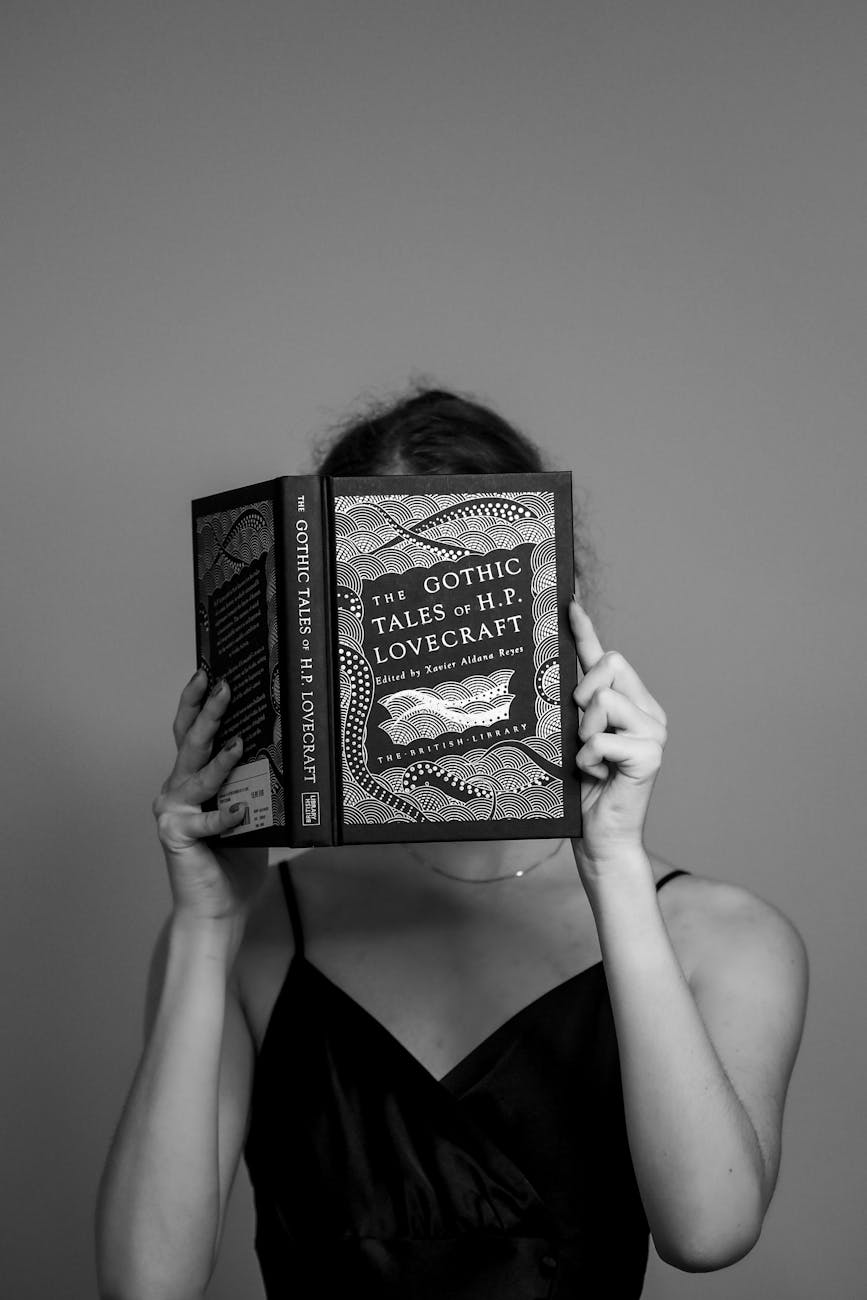
Last Thursday was World Book Day. As a parent I always find it inspiring to see all the children at my sons’ school get excited about their favourite stories and characters. Walking into school we saw scores of exuberant kids dressed as characters that someone somewhere was once just siting in their study — or coffee shop, or office — and making up.
In the ongoing social media discourse I saw a few perennial themes coming up. There were the parents complaining about the pressure to come up with costumes (we’ve fluctuated wildly over the years between staying up all night on something elaborate and throwing something together at the last minute that will just about do), the questioning of whether WBD is really for people who like books, or to promote reading to people who don’t, and the oldest canard – whether serious people should read fiction at all.
If you’ve read the headline to this update, you can probably guess my view on the last point. I might add that, as the holder of a degree in literature, I am unashamedly partial on this question.
With all of that said, here are four things I think we can all learn from reading fiction.
Style
Fiction is written for an audience for whom it is entirely optional. More than that even, it is effectively a luxury for most of us to take the time to sit and read a novel (or short story, book of poetry, etc). We read it for entertainment, if it’s not entertaining then there’s little point continuing and we may well abandon it. As such, reading fiction is an object lesson in writing in an inviting and engaging style.
This applies both to well-written, compelling fiction and to poorly-written, stodgy, or overwrought fiction. From the former we may learn positive lessons about how to engage our readers, how to make them want to keep reading and how to express ideas clearly. From the latter we may learn what not to do, which is equally valuable. In fact it’s often easier to avoid the mistakes of a bad example than to emulate the virtues of a good one.
I’m a firm believer that to a very large extent writing is writing. We may have to adapt to expectations to a degree, but writing in a style that your reader finds easy to follow and understand runs across genres, and is pretty constant between fiction and non-fiction. So when you’re reading fiction, try to keep alert to what you find appealing (or off-putting) about the voice, register, word choices and tone the author uses. Just the act of absorbing more of this will expand your own toolkit as a writer, seeing different ways you could approach the same piece of writing and helping you to decide which of those approaches will work best.
Clarity
As well part of the strategic objective of entertainment, fiction writing has to manage the challenge of clearly presenting the reader with the parameters of its setting. Perhaps this is a world the author expects their readers to recognise as familiar, but often even “realist” fiction conjures lifestyles, environments, relationships or scenarios very different from the experience of a typical reader. Speculative and historical fiction often go even further in outlining a setting that is in many respects alien to any reader’s experience.
Having established a setting, a work of fiction then needs to establish its stakes. Who are the protagonists and why should we care about them? What obstacles are they trying to overcome and what are the consequences of their success or failure? Stephen Fry describes this in terms of tennis, that it is vital that readers can see “the ball” in order to understand why the players are moving in the way that they do around the court. Speculative fiction writers — when reflecting on how they write — often talk about the importance of establishing what the “rules” are, what magic or technology is capable of in their world, and what its constraints or costs are. Without understanding these elements a narrative becomes weightless.
There is much we can learn from observing this in reading fiction, again whether we adjudge it to be done well or badly. In academic writing it is equally essential to convey to readers what our parameters and stakes are, and absorbing a wide range of approaches to achieving this can only be beneficial. It is fundamental to effective scientific communication to convey not just what our experiment or analysis is, but also what it’s ramifications are.
A clear narrative through-line is crucial for readability. This is true for both academic and fiction writing, but is something fiction writers tend to be more attuned to. They think in the language of plot and pacing, where academic writers are often more bound to the format structures of essays and reports.
This includes key elements like establishing clearly what is at stake, ensuring that, when key revelations are made, your readers understand their significance and ramifications. It means developing a sense of when to introduce information, how much needs to be said upfront and what can be held back for later.
Whole books have been written on narrative structure and we can’t cover all the various aspects of this here. What I will say is that we can benefit substantially from simply ensuring we keep ourselves familiar with the rhythms of narrative writing. We won’t always be consciously trying to mimic a fictional approach to narrative — nor should we be — but keeping ourselves attuned to it helps us to have a feel for the structure and shape of our writing
Insight
The stories we tell about ourselves can be as important to our understanding of humanity as any empirical observations. So far we’ve considered the more technical lessons we can learn from reading fiction, but we shouldn’t overlook that there’s also much to be learned from the nature of the stories themselves.
Storytelling is a universal human activity. It’s one of our defining behaviours as a species. Stories play a fundamental role in our societies, and have enormous persuasive power that underlies virtually all of our culture. Our empathetic brains find stories in sequences of events in much the same way that we see faces in any image that even vaguely has elements that could be interpreted as eyes, nose or a mouth.
It follows that engaging with fiction is a central part of understanding just about any field of human endeavour. We cannot really understand politics, sociology, economics, history, human geography, psychology or any number of other academic fields without an active interest in fiction.
I won’t enumerate here all of the many aspects of human nature and human society that can be derived from reading fiction, but it’s worth considering some examples. What, for instance, does it tell us about ourselves that so many of our stories are fundamentally about love (romantic or otherwise) and the bonds it creates between us? Or what might we learn from the monsters we imagine — creations that play on our fears and embody them?
Some fiction will be of especial relevance to particular disciplines. So, for example both historical fictions about a particular period, and especially fictions written contemporaneously to that particular period, can be immensely helpful to historians. Speculative fictions that attempt to show how society might be different if one major variable (a new technology, or magic, perhaps) were introduced can similarly be valuable for sociologists and political scientists trying to understand how societies might be otherwise, or at least how we might imagine them being otherwise.
If your field of study is in literature or the arts, this is all self-evident and intuitive, but it applies as much to any field where humans or human activity are the object of study.
Empathy
Exercising our ability to empathise with others makes us better writers. Reading fiction is not the only way to do this, but it is an essential one. Regardless of genre, reading any story asks us to imagine being somebody else, someone who may not be like us, or someone who might be a lot like us, but faced with environments, scenarios or decisions quite different to our own lives. Or perhaps to imagine being someone who actually is a lot like us, and lives in a world much like ours, facing challenges much like our own and whose approach to those challenges will help us understand our own decision-making and motivation.
Whatever kind of fiction we choose to read, and regardless of whether it has anything to do with our academic writing, it acts like a training regime for our empathy. This makes it easier for us to employ it when we’re writing ourselves, drawing on our imagined experience of being other people to help us imagine our own readers. The more we can imagine who our readers might be, how our words might make them feel, what kinds of experiences they might have — whether similar to or different from our own — the more likely we are to be able to write in a way that they find engaging. Again the mere fact of practising this kind of imagination tends to make it not only easier, but more intuitive, something we do even without active thought.
That’s it from me for this week, I’m off to read a book! I’ve just finished The Way of All Flesh by Ambrose Parry (a thriller set in mid-Victorian Edinburgh) and am now getting started on Yahtzee Croshaw’s Will Leave the Galaxy for Good, the third of his very silly Dashford Pierce space opera novels, which also has quite a lot to say about the nature of fiction and story-telling.
As always, do get in touch on proposals@tbarnpress.com if you’re ready to put down the book you’re reading and start writing your own (non-fiction) one.
