
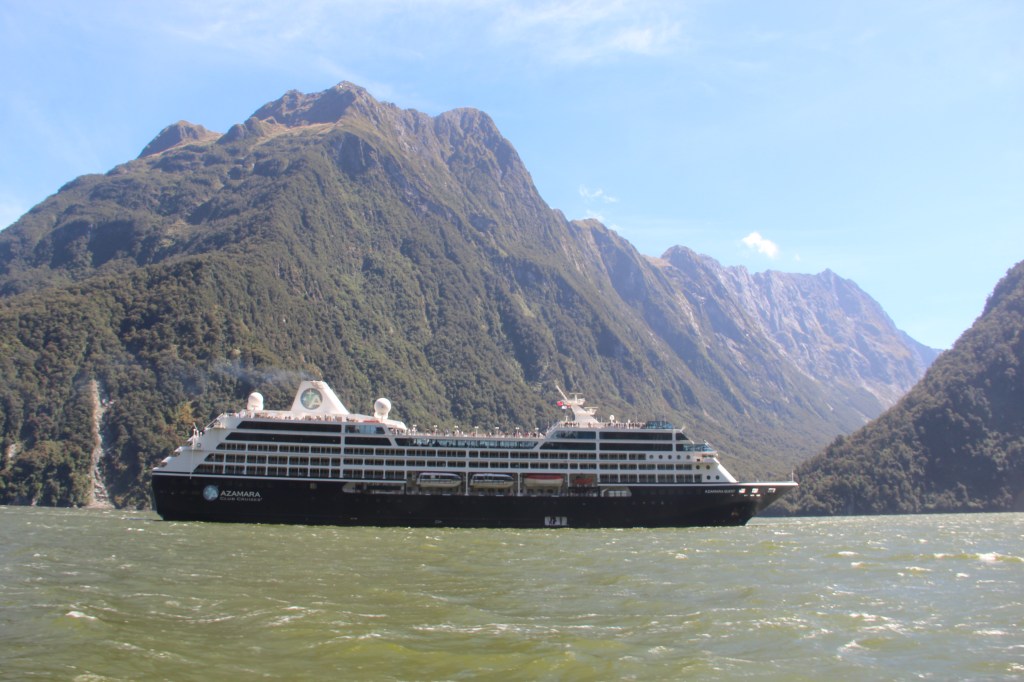
I’ve long been fascinated by the paradox of the sea – and really this applies to any large body of water, be it a great lake, or a navigable river, as well as the open ocean – that it is at once a barrier and a conduit.
From a military point of view, sea borders tend to be defensible because of the high cost in blood and treasure of attacking across open water, but also vulnerable when an enemy is prepared to deploy in strength potentially with war machines that would be unthinkably large to manoeuvre on land. Similarly, for more peaceful activities, like trade and transport, the sea is a boundary requiring significant resources to cross, but also enables the movement of vast amounts of people and goods at low proportional cost.
The sea remains a vital part of the exchange of goods, with around 80% of international trade carried by sea, and consequently presents vulnerabilities to piracy, blockade, military interception, and simply the exposed nature of isolated ships in the open vastness of the ocean. For many of us this is a largely hidden world. We go to the beach and look out to sea, or perhaps marvel at the scale of a container port like Rotterdam or Singapore, but the sheer enormity of the sea compared to our own islands and continents is hard to grasp.
It’s a common element among our Themes that they have some very obvious relevance to certain disciplines, but one of the fun things about them is to think laterally about what else they could encompass that is less obvious. For example, film and literature studies titles looking at how the sea (and other navigable bodies of water) is depicted throughout, say Disney movies (Pocahontas, Moana, The Little Mermaid, Peter Pan, Pirates of the Caribbean) or the Western literary canon (The Odyssey, Robinson Crusoe, Moby Dick, Treasure Island, The Old Man and the Sea, Twenty Thousand Leagues Under the Sea). Whereas an entirely different direction might be something more along the lines of, say, examining the logistical and economic implications of shipping capacities, and how human geography has been shaped by the potential for comparatively large quantities of goods to be carried in a small number of ships that individually represent a sizeable capital expenditure.
One of the things I’m looking for in establishing Themes for Tithebarn Press is a combination of broad scope – with lots of different angles of approach – and a relatively rigid boundary test of what it does or does not cover. If you’ve read my previous blogposts ruminating on our other Themes you’ll hopefully have gotten a bit of a sense of this, but Seafaring is rather a nice concrete illustration. On the one hand, it can (and hopefully will) encompass contemporary and historical naval warfare, the history of exploration, the geopolitics of maritime trade, the law of the sea, the cultural importance of the sea, piracy, fishing and so on. On the other hand there is a relatively unambiguous test for whether a book project can justifiably be fitted within the theme – does it relate substantially to the sea, lakes, rivers and/or canals? If so, there’s little doubt that it can fit within this theme, if not, there’s little room to argue that it could.
So, if you’re working on something relating to oceans, seas, rivers, lakes, whether historical, geographical, political, economic, or in the realm of the arts, do get in touch to discuss how we might work together on a book project.
This’ll be the last of these broad exploration posts on our Themes, now that we’ve covered all four. Next week we’re going to change gear a bit and talk more about what we mean when we say we offer a personalised service to authors.
