
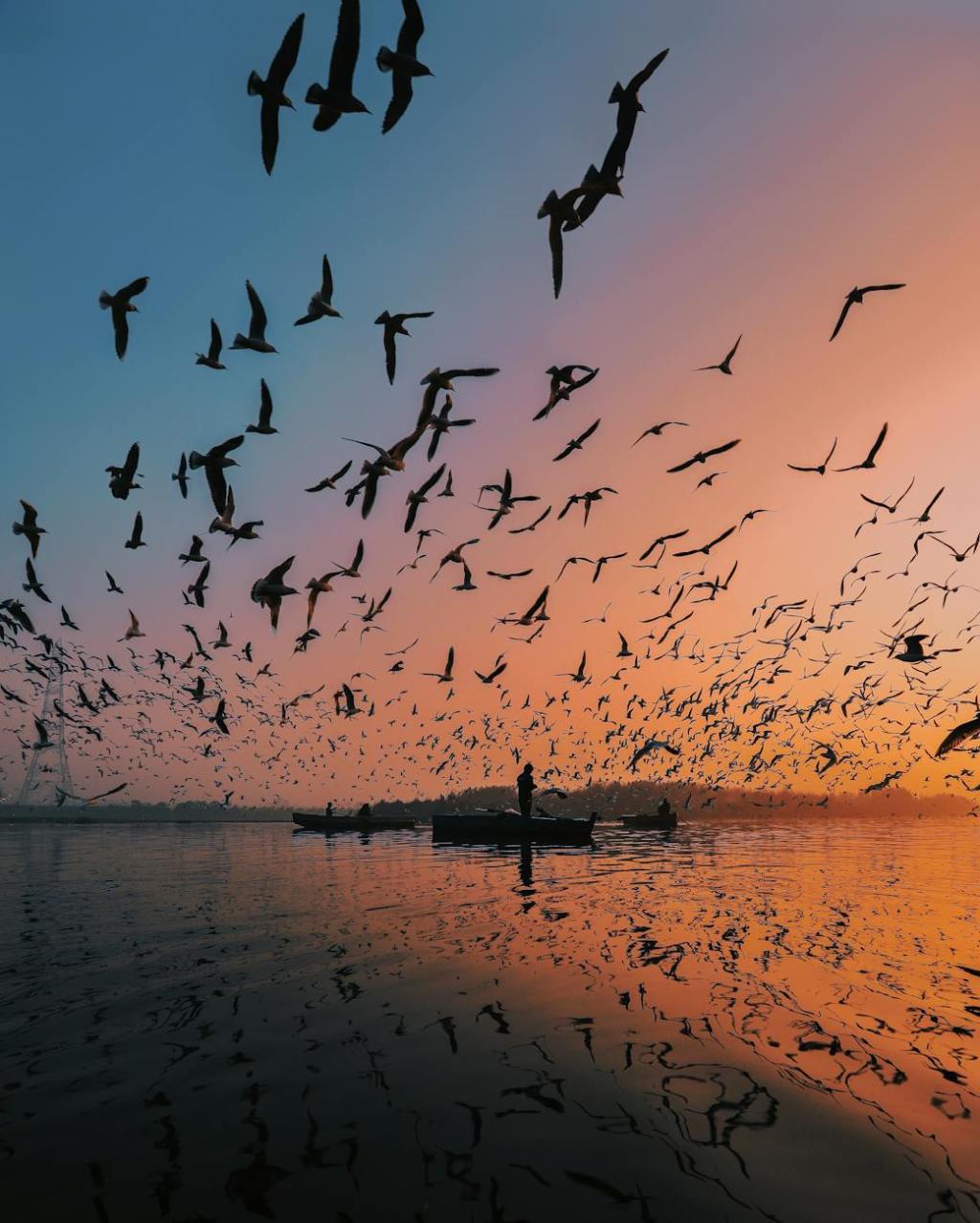
Migration
I am myself a migrant. I am less of one than I used to be, if that’s possible to say, but I remain a migrant. I spent most of the first 24 years of my life within about fifteen kilometres of Oxford, and then proceeded to spend the next twelve and a half years about eleven thousand kilometres away in Singapore.
Having returned to England I’m now down in Devon, a couple of hundred kilometres from Oxford. My first migration was an economic one, I was offered a transfer to Singapore alongside a ptomotion. The second migration, back to England but down to Devon, was sentimental. After the Covid years, with our parents and children aging, and a bit fatigued with various elements of life on the little red dot, we wanted to come back “home” and much of my extended family was now in Devon.
These experiences have given me some varied perspectives on migration, albeit coloured by privilege. It’s a wonderful thing to be able to live somewhere else for a while, to experience different cultures not just for a week or two on holiday, but for an extended time. To really get to know somewhere the way you know the place you call home. The funny thing is it comes to seem so normal that it can be surprising to remember that most people end up staying pretty close to where they were born.
There are so many different types of migration to consider, in different contemporary and historical contexts, I think it’s valuable to reflect on the bigger picture as well as dwelling on particular cases.
For instance, the relationship between migration and the welfare state is very complex. On the one hand, it is challenging for a state to have a generous level of social support if it is comparatively easy for non-citizens to migrate there and benefit from that support. On the other hand, a very many countries’ health and social care sectors (among others) are sustained in large part by migrant labour. Then there’s the impact of outward migration on the communities left behind. The economic impact of migrant workers remitting money home can be very significant, particularly in developing countries, but so too can be the societal impact of a large proportion of a particular cohort spending most of their working lives abroad. In the Philippines, for example, there are communities where a large proportion of the women between 20 and 50 years old are working as domestic helpers or healthcare workers overseas, while their husbands and older relatives remain and have responsibility for raising their children.
One particular reason that I selected migration to be one of our first core themes is that so often throughout history the movement of people stimulates changes in culture. Not all of these stories are happy ones, of course, a great many imperial powers developed exotic culinary tastes while oppressing, killing, or infecting numerous locals. Nonetheless, in literature, material culture, music, visual arts, languages, culinary culture, and many other domains, important changes have been brought about as a result of migration. As such, studying migration often gives us a way into understanding how societies and their cultures change over time. It also helps us to understand history internationally, by lifting our focus from the sometimes siloed image we can have of individual states.
In a similar vein, sometimes specific accounts of migration can be very resonant. So many societies’ origin stories are about either where “we” came from or about how “we” integrated a people that used to be a “them”. For so may societies the waves of immigration appear rather like the different strata of rock visible in the cliffs of my local Jurassic coast. Each layer relating to a different group of people who came most particularly at a different point in our history.
As with my other blog posts ruminating on our Themes, my intention here is to put across some of what inspired me to select this theme, and hopefully to put across some ideas that will resonate. As always, we welcome proposals for books that touch on some of these themes, or that come at the topic of migration from an entirely different angle.
